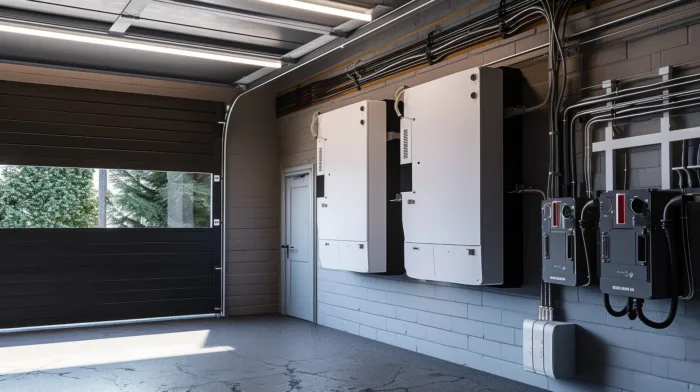

Heat pump water heaters (HPWHs) are transforming how we think about domestic hot water in all-electric buildings. But designing these systems isn’t just a matter of swapping out a gas unit for an electric one; the underlying design principles are different.
To deliver reliable performance, project teams must carefully consider equipment selection, ventilation, sizing, and ambient conditions.
How Heat Pumps Work and Why Refrigerants Matter
Heat pumps operate using the refrigeration cycle, which relies on refrigerants with low boiling points that can readily change phase (liquid ? vapor). As the refrigerant circulates, the phase changes enable it to absorb and release heat efficiently. However, not all refrigerants behave the same, making refrigerant selection a key factor in heat pump performance and sustainability.
Common refrigerants in heat pump water heating:
- CO2 (Carbon dioxide): performs well at low ambient temperatures, offering high system efficiency
- R410A: common low-pressure refrigerant with moderate efficiency, loses efficiency at low ambient temperatures (below 40F)
- R513A: a lower global warming potential (GWP) refrigerant with performance comparable to R410A that significantly reduces environmental impact
Ambient Temperature: A Critical Design Driver
HPWHs extract heat from surrounding air; ambient air temperature strongly affects system output. Performance declines in colder air, which means product selection and location should align with expected environmental conditions.
Design tip: Always size your system for the coldest expected ambient conditions, not average conditions.
- Evaluate heat pump capacity alongside performance curves, not just nameplate ratings
- Select equipment based on refrigerant type and climate suitability
- When possible, install units inside conditioned space in cold climates
Rethinking Sizing: Storage Over Capacity
One of the most important shifts in HPWH design is that systems should emphasize storage volume over heat pump capacity.
This stands in contrast to traditional combustion-based systems, which are typically sized to meet instantaneous demand. With HPWHs, recovery rates are slower because heat pumps move heat rather than generate it directly. As a result, stored hot water becomes the primary buffer for peak demand. Supplying instantaneous hot water using a heat pump is generally not recommended as a design strategy.
- Prioritizing storage over capacity can reduce overall hot water system costs including electrical service capacity, peak demand charges, and equipment replacement due to short cycling
- Large storage tanks provide enhanced resiliency, load shifting, and demand response opportunities
What this means in practice:
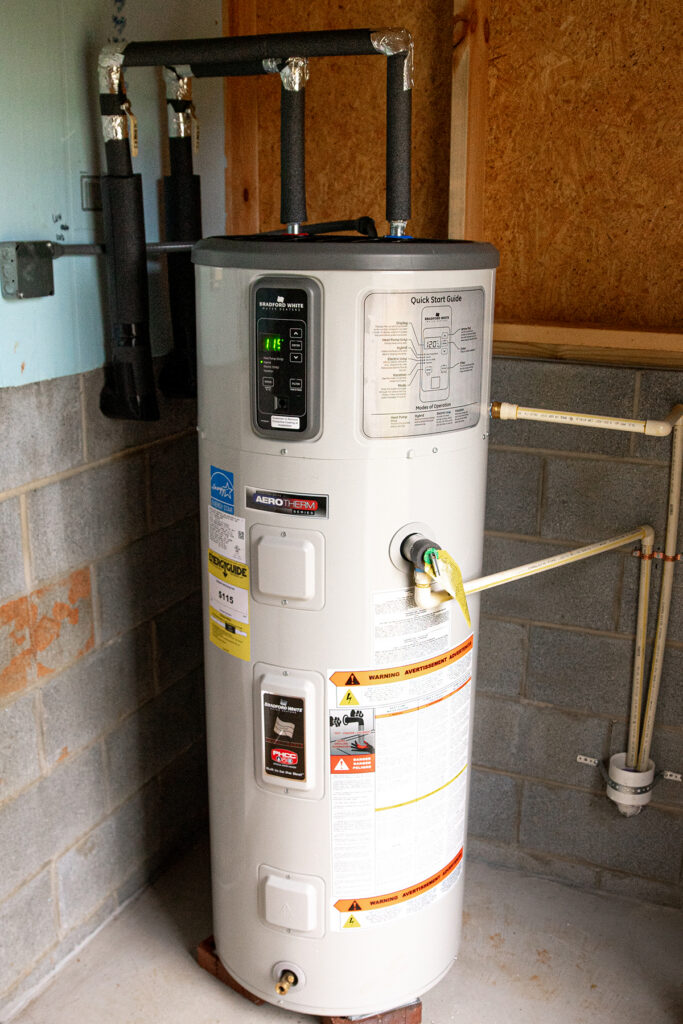
- Size storage tanks based on actual demand. Storage capacity should be determined by the building’s maximum occupancy and peak hot water usage, considering demand diversity and usage patterns across the building.
- Avoid oversizing storage tanks. Increasing storage volume beyond the building’s typical demand provides little benefit and can lead to excessive water cooling and reduced system efficiency.
- Include a Thermostatic Mixing Valve (TMV) in all water heater designs. A TMV allows hot water to be stored at a higher temperature while delivering water at a safe temperature.
Location and Ventilation: Often Overlooked, Always Critical
Unlike combustion systems, HPWHs rely on airflow and heat exchange with the surrounding environment. Adequate air circulation is critical to maintaining heat pump performance.
- When installing in an enclosed space, design and install airflow pathways to maintain stable ambient conditions
- Follow manufacturer guidelines for minimum square footage and net free area of louvers to prevent excessive cooling of the space
- Ducting should be leveraged when a HPWH is in a space that is very small and/or insufficiently vented
Ventilation is not an afterthought, it’s a core design requirement.
Final Thoughts
When done right, HPWH systems deliver efficient, reliable, and safe hot water, making them a cornerstone of high-performance, all-electric buildings.
A successful design balances:
- Storage capacity
- Ambient conditions
- Ventilation
- Appropriate equipment selection
- Commissioning and operational tuning
Ready to get started?
Contact CalEHP’s technical assistance team for a no-cost design review to help optimize your design and maximize performance. Reach out today!
Additional resources:

CalEHP program partner AEA provided content for this blog.
The Association for Energy Affordability, Inc. is dedicated to achieving energy efficiency in new and existing buildings in order to foster and maintain affordable and healthy housing and communities. AEA representatives engage in a broad range of educational, technical and construction management activities and services to promote this mission and develop the industry that advances and sustains it.
August 3, 2026